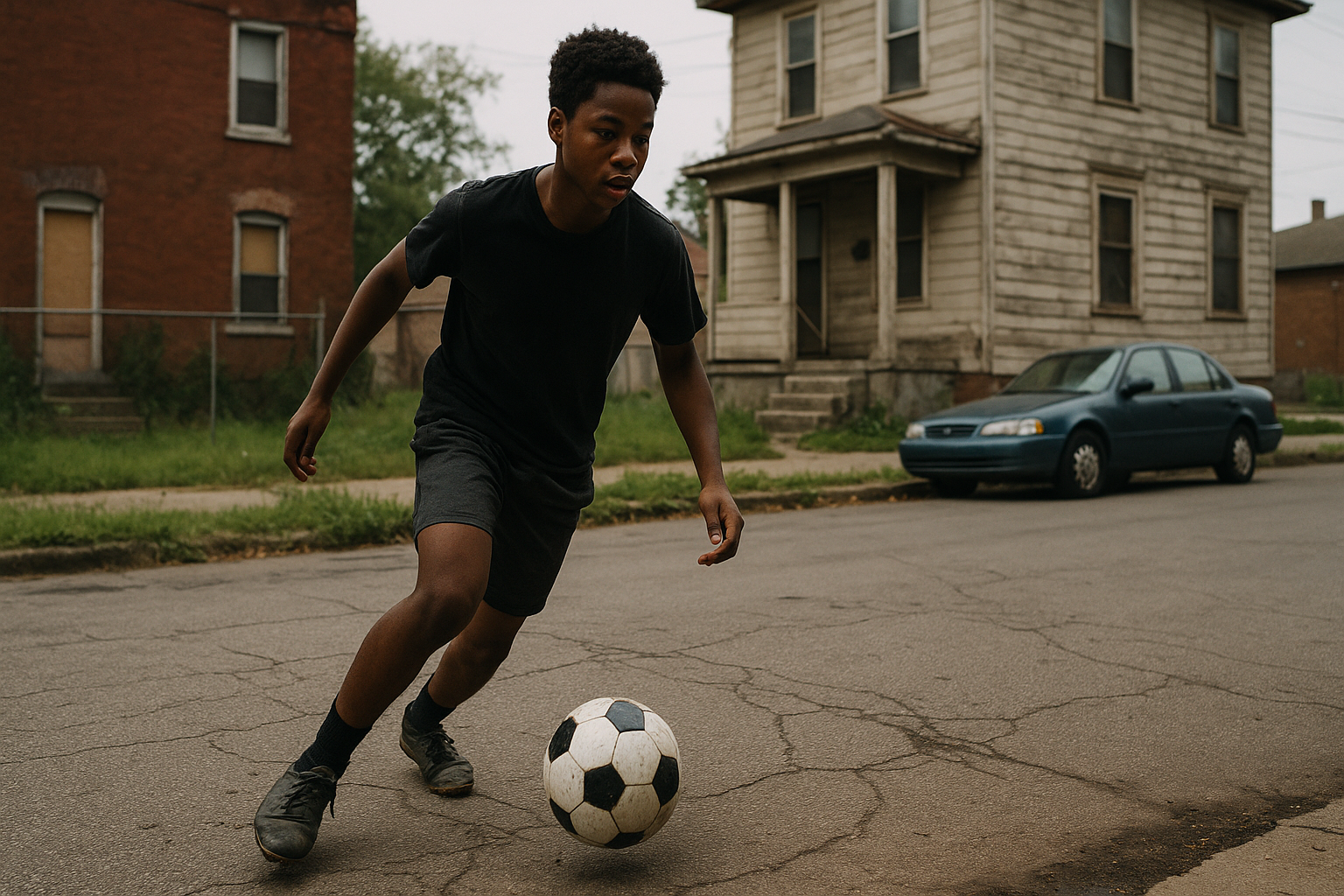
There is a conversation happening in barbershops and rec centers from Charlotte to DC, from Atlanta to New York. It is not loud yet, not the way it gets when the Tarheels are struggling or the Falconss are in the playoffs. But it is there, quiet and serious, and it concerns soccer. Specifically, it concerns why American men keep falling short in the one global sport that has so far resisted the country's athletic dominance, and whether the answer has been sitting in plain sight the entire time.
Consider the evidence without sentiment. Across virtually every sport Black Americans have entered with full cultural investment, the results have been historically disproportionate. The population of Black Americans sits somewhere around 13 to 14 percent of the United States, a fraction of a fraction of the global population. And yet the list of individuals who can be reasonably called the greatest to ever compete in their respective disciplines is dominated by people from this community. Muhammad Ali. Michael Jordan. Kobe Bryant. LeBron James. Shaquille O'Neal. Stephen Curry. Serena Williams. Simone Biles. Tiger Woods. Barry Sanders. Deion Sanders. Patrick Mahomes. Lamar Jackson. Cam Newton. Barry Bonds. Willie Mays. Hank Aaron. Jon Jones. Carl Lewis. The list continues for a long time. Extend it globally and you arrive at Usain Bolt and Lewis Hamilton, men who conquered sports not historically designed with them in mind. The pattern is not coincidence. It is documentation.
What the pattern documents is a concentration of kinetic intelligence, physical intuition, and competitive drive that the world has not been able to replicate or explain away. These are not athletes who succeeded in favorable conditions. Many competed inside systems that were explicitly hostile to their advancement and still produced results that restructured what the rest of the world understood to be possible. The argument that a sport is too cerebral, too technical, or too culturally foreign for Black athletes to dominate has been tested repeatedly. It has failed every time.
Quarterback is the most instructive case. For decades, the position was framed as requiring a particular kind of leadership and intelligence that was described, usually without much subtlety, in ways that functioned as exclusion. The same logic now sometimes applied to soccer, that it demands a different kind of tactical thinking, a certain positional discipline, a style of play that does not match, was once applied to the most important position in American football. What happened when that barrier eroded? Michael Vick changed the geometry of the sport. Then came Cam Newton, Russell Wilson, Patrick Mahomes, Lamar Jackson, Jalen Hurts, and a cascade of top draft picks and college dominance that has not slowed. The position that was once closed is now a showcase. The sport did not constrain the talent. The talent restructured the sport.
Soccer remains the one major global sport where this dynamic has not yet played out at the men's professional level in the United States. The reasons are economic and cultural more than athletic. Youth soccer in the Carolinas and across the country has historically resisted black cultural acceptance and has required fees, travel schedules, and access to private clubs that created a sorting mechanism long before a child ever touched a professional field. The sport has simply not embedded itself in the same neighborhoods and cultural references that produced the athletes named above. That is a resource and infrastructure problem, not a talent problem. Cities across the country are now seeing more investment in accessible soccer programming, and the youth numbers are shifting due to CTE concerns and greater global information sharing and social media. The pipeline, long narrow, is beginning to widen.
The question for Black communities across the Carolinas and the broader country is straightforward: what would it mean to claim this sport the way previous generations claimed basketball, track, or football? The infrastructure investment, the coaching pipelines, the cultural signals that tell a ten-year-old that this game is for someone like them, those are decisions being made right now at the local level. And the argument for the rest of the world is simply historical. The United States has a group of athletes, drawn from a specific community with a documented record of transforming every sport it has seriously entered, who have not yet directed that attention toward soccer at scale. When that changes, and the evidence suggests it is beginning to, the global game should prepare accordingly.