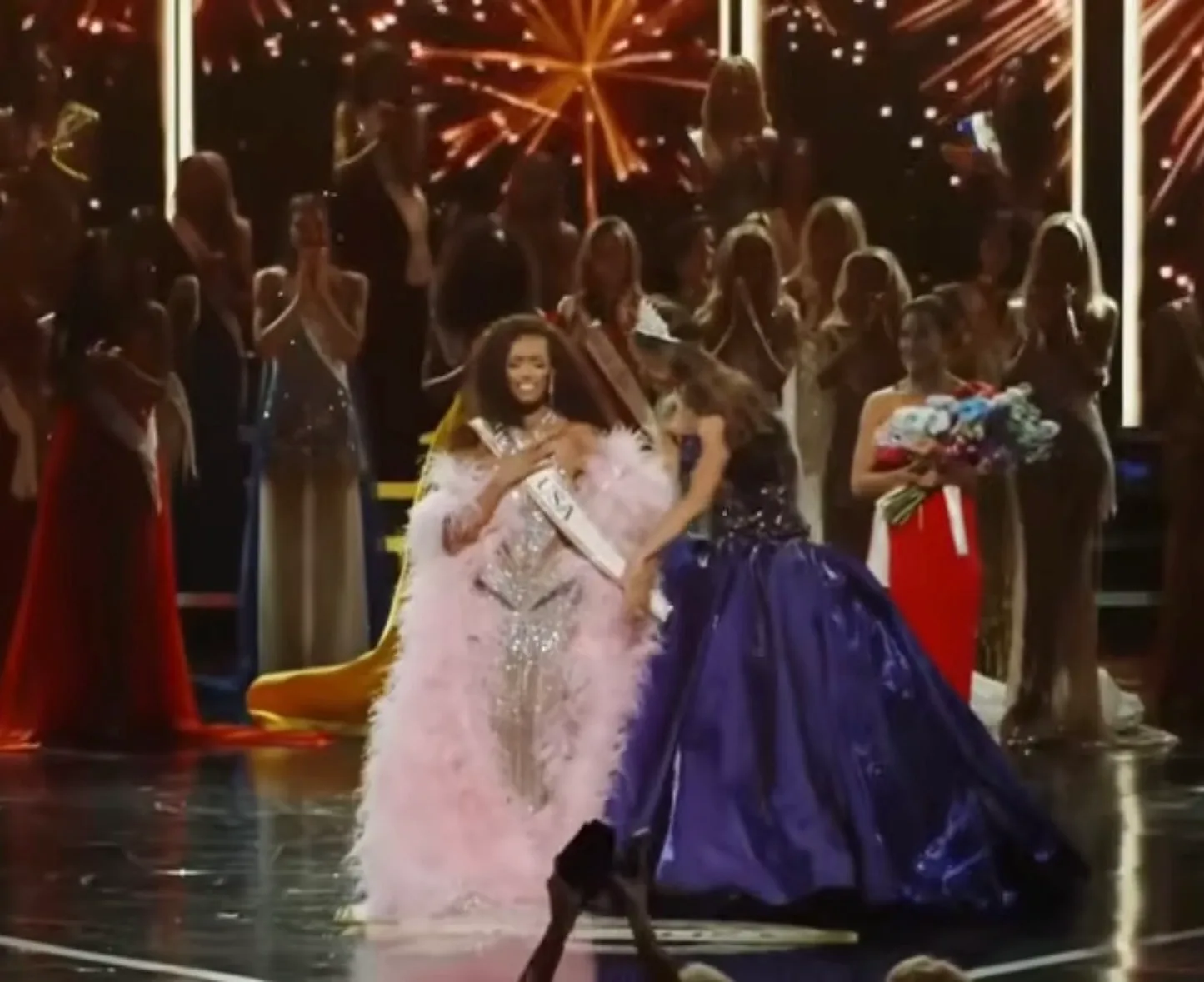
Virginia Justus Kelley was crowned Miss USA 2026 over the weekend, winning the national title in a competition that drew contestants from all fifty states and the District of Columbia. Kelley, who represented Virginia in the pageant, defeated a field that included competitors from North Carolina and South Carolina, both states that have sent finalists and winners to the national stage with enough regularity that the pageant circuit here amounts to a modest but measurable local industry.
The Miss USA organization, now operating under new ownership after years of turbulence that included a public break with Donald Trump in 2015 and a subsequent sale, has worked to rebuild its credibility among state directors and sponsors. That institutional history matters in the Carolinas, where several state-level directors run their franchises as small businesses, contracting venues, coaches, photographers, and stylists — many of them locally owned — across the competition calendar year.
Kelley's victory is notable in part because Virginia has not held the Miss USA title in several decades, making the win a regional talking point for pageant communities stretching from the Shenandoah Valley south through the piedmont. In communities like Concord, Fayetteville, and Greenville, where local titleholders compete in systems that feed into the Miss North Carolina USA and Miss South Carolina USA pipelines, a regional win tends to lift interest and, with it, enrollment in preparation programs and local preliminaries.
The economics are not incidental. Pageant preparation in the Carolinas supports a diffuse network of businesses — interview coaching practices, evening wear boutiques, fitness studios offering pageant-specific conditioning, and photographers who split their work between weddings and competition headshots. State-level competition weekends generate hotel stays, restaurant spending, and venue rental revenue in mid-sized cities that have come to count on that traffic. A high-profile national result can push that activity upward for a cycle or two, as families invest in a daughter's candidacy on the theory that the path is viable.
What Kelley's win signals culturally is harder to quantify but worth noting. She is, by public accounts, a college-educated young professional who emphasized policy literacy and civic engagement during the competition — characteristics that the Miss USA organization has tried to foreground as it competes for relevance against Miss America and a broader landscape of televised talent and influencer platforms. Whether that repositioning takes hold in the Carolinas, where traditional pageant culture and newer ideas about what these competitions should accomplish exist in real tension, remains an open question. For now, the organizers in both states will watch how the new titleholder uses the platform, and adjust their own marketing accordingly.