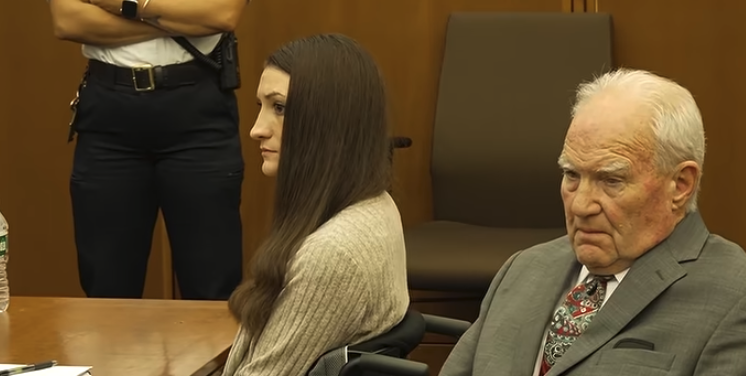
Lindsay Clancy, a Massachusetts woman charged with killing her three children in January 2023, is receiving a trial that most legal observers describe as procedurally sound. Her jury includes nine women and three men. Her defense centers on severe postpartum psychosis, a medical condition that many of those jurors may have personal proximity to, through their own pregnancies, their daughters, or their close friends. That proximity matters enormously. Research consistently shows that jurors extend greater empathy to defendants whose experiences they can imagine living themselves.
The Equal Justice Initiative has documented in careful detail how the systematic exclusion of Black jurors from cases involving Black defendants has produced convictions, death sentences, and wrongful imprisonments across generations. In the South, prosecutors used peremptory strikes to remove Black jurors at rates that made a racially mixed panel nearly impossible. The harm was not incidental. It was structural, and it compounded across decades of criminal cases in communities throughout the Carolinas and beyond. Black defendants were regularly judged by people who had no framework, and in many cases no interest, in understanding their circumstances.
A 2012 Duke University study found that all-white juries convicted Black defendants at a rate 16 percentage points higher than white defendants in similar cases. When even one Black juror was added to the panel, that gap essentially disappeared. The study controlled for the severity of the charges. The finding was stark: representation in the jury box changes outcomes, not because jurors of the same race automatically favor defendants who share their background, but because diverse panels ask different questions, surface different assumptions, and resist the shortcuts that homogeneous groups tend to take.
Clancy's case has received sympathetic media coverage that focuses on her mental health history, her role as a mother, and the pressures she faced. That coverage reflects how her identity allows audiences to hold complexity, to see a person capable of catastrophic harm and still ask what brought her there. That capacity for complexity is not wrong. It is, in fact, what justice requires. The problem is its selective application. Black men accused of far less have been flattened into archetypes by the same media ecosystems, denied the narrative space to be understood as full human beings under pressure.
For readers in the Carolinas, this is not an abstract national debate. North Carolina's own history includes documented cases of racially skewed jury selection, and the state's Racial Justice Act, passed in 2009 and later repealed, acknowledged that the problem was real and measurable. The Clancy trial is not an argument against empathy for a mentally ill defendant. It is an argument for extending that same methodical empathy, the same willingness to ask what a person was experiencing, to every defendant, regardless of race. Until jury composition reflects that standard consistently, the courthouse will remain a place where some people are humanized and others are simply processed.