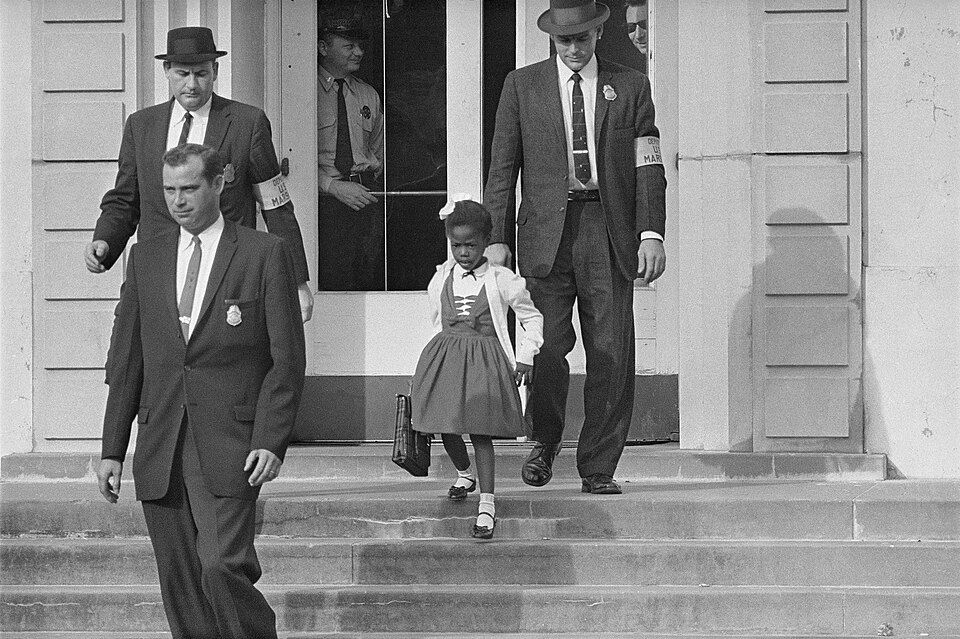
The Brown v. Board of Education decision of 1954 is rightly remembered as a constitutional turning point. What the celebrations have long obscured is an economic and civic catastrophe that unfolded in its wake. Within two decades of the ruling, more than 38,000 Black teachers and principals lost their positions across the South, according to research documented by historians writing for the Organization of American Historians. The students those educators served were absorbed into white-controlled school systems where the welcome was, at best, conditional. The infrastructure that Black communities had financed through church fundraisers, fraternal orders, and sheer sacrifice was dismantled, often permanently.
The mechanism of destruction was not malice alone, though malice was present. It was indifference to institutional value. Federal and state desegregation orders focused on the movement of bodies across district lines. They did not require white school boards to retain Black educators, preserve historically Black school buildings, or honor the pedagogical traditions those schools carried. When Black students arrived at newly integrated schools, they arrived without their teachers, without their principals, and without the community accountability structures that had defined Black schooling since Reconstruction. The loss was treated as an acceptable transition cost. It was not a cost. It was a transfer of wealth and authority from Black institutions to white ones.
The long-term civic damage is measurable. Research cited in the OAH analysis shows that communities where Black schools were shuttered experienced generational disruptions in educational attainment, community leadership pipelines, and local economic mobility. Black schools had functioned as anchor institutions, employing credentialed professionals, circulating payroll dollars within the community, and producing civic leaders who went on to run churches, businesses, and eventually political offices. When the schools closed, those anchor functions did not migrate to integrated institutions. They simply disappeared. The integrated school hired a Black student but rarely hired Black teachers at scale or welcomed Black parents into governance.
None of this is an argument against integration as a principle. Separate schooling enforced by law was a tool of subordination, and dismantling legal apartheid was necessary and right. The failure was not the goal but the execution, specifically the refusal to negotiate the terms of transition in ways that protected Black institutional assets. Other policy moments offer instructive contrasts. The G.I. Bill extended homeownership benefits broadly but its local administration systematically excluded Black veterans. Desegregation policy repeated that pattern, announcing equity at the federal level while allowing its negation at the county level. The pattern is consistent enough to deserve a name beyond accident.
What this history demands now is not nostalgia but accountability in the form of policy. Contemporary debates over Historically Black Colleges and Universities funding, Black teacher recruitment pipelines, and community control of public schools all trace their roots to the uncompensated losses of the post-Brown era. Reparative framing is not rhetorical excess here; it is economically precise. Communities that lost institutions, payroll, and professional authority were made materially poorer. Any honest education reform agenda in 2026 and beyond must account for that subtraction before it can credibly promise addition.